
01
Design at architectural scale
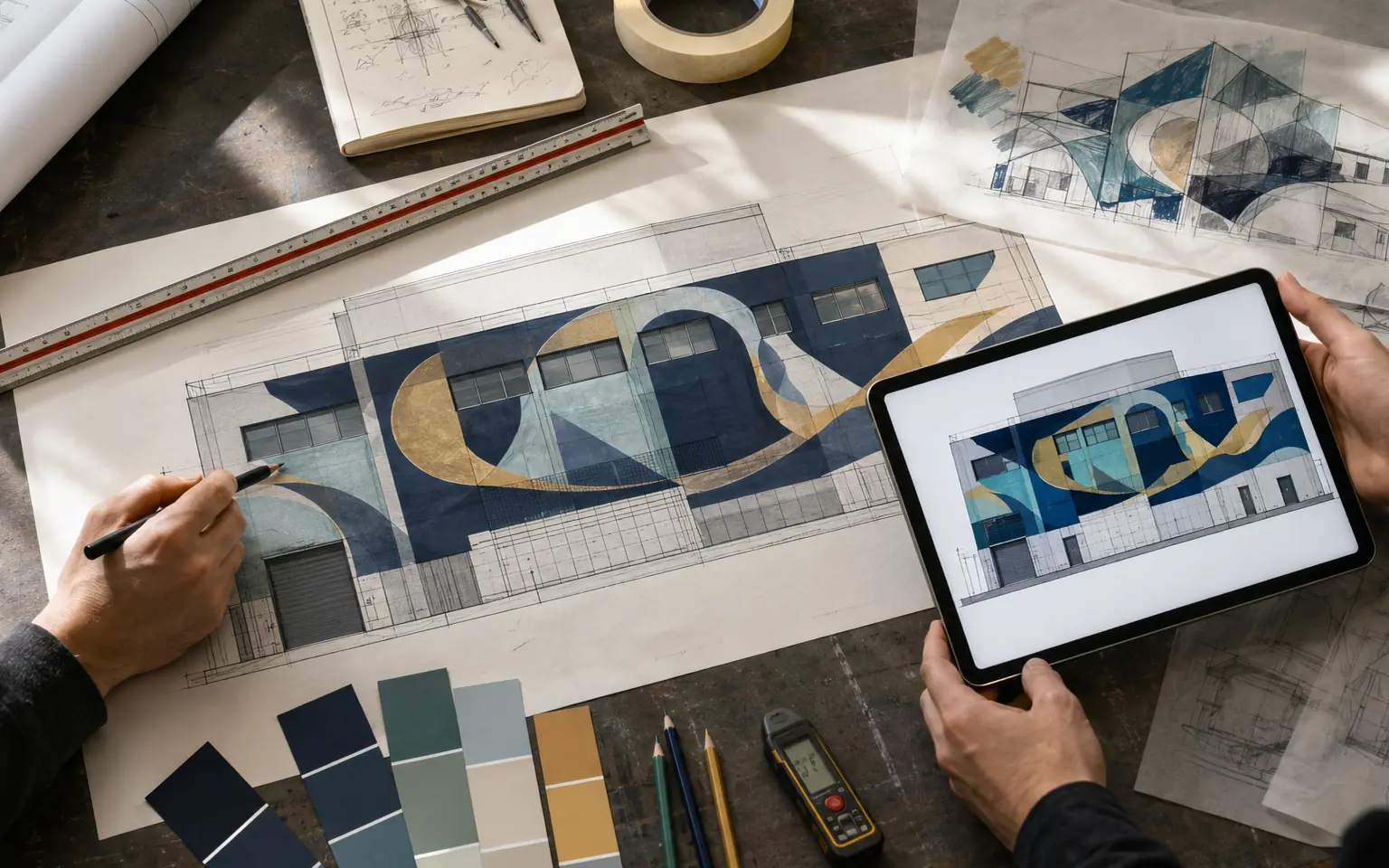
Interpret a site, develop artwork, strengthen composition, and translate an idea from sketch or screen to a full wall.
Education & Mentorship
PME connects artistic development to the practical decisions, tools, technology, and professional habits required to move an idea from concept to wall.
How learning works
Training is grounded in practice. Participants learn by interpreting a site, developing and scaling artwork, preparing surfaces, selecting materials, using equipment safely, organizing production, communicating with collaborators, and documenting the finished work.
Experienced artists, designers, educators, and painting professionals guide the process. Instruction happens alongside real decisions and real constraints, allowing participants to understand not only how a technique works, but when and why to use it.
What participants learn
Interpret a site, develop artwork, strengthen composition, and translate an idea from sketch or screen to a full wall.
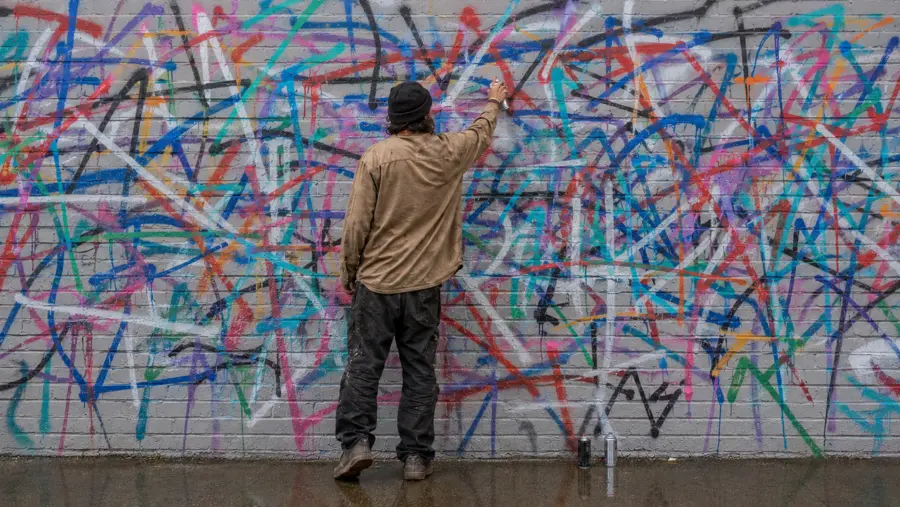
Prepare surfaces, understand coating systems, mix color, and build control with brushes, rollers, spray equipment, and specialized tools.
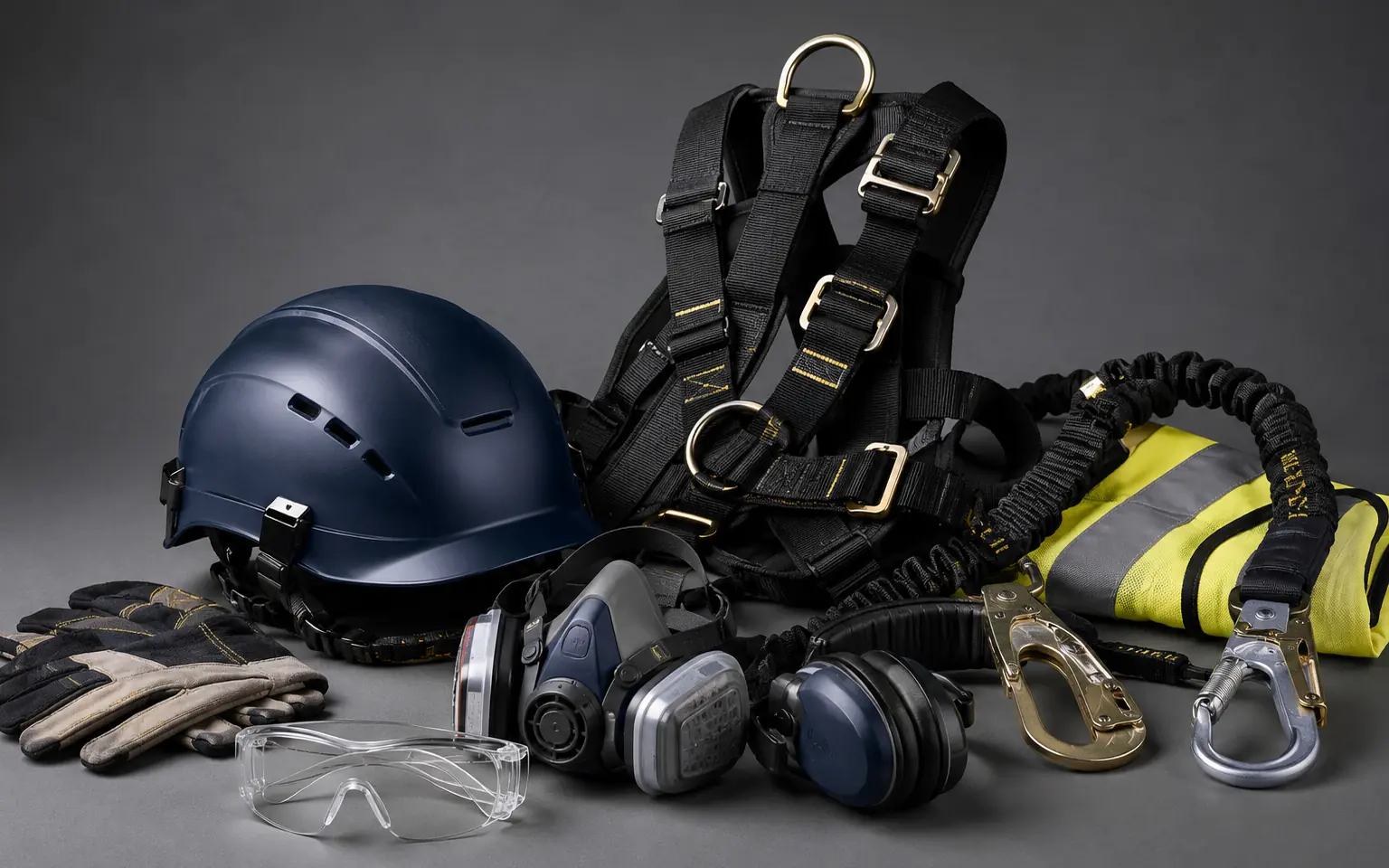
Plan a jobsite, use access equipment responsibly, protect the surrounding environment, organize materials, and work within a professional production sequence.
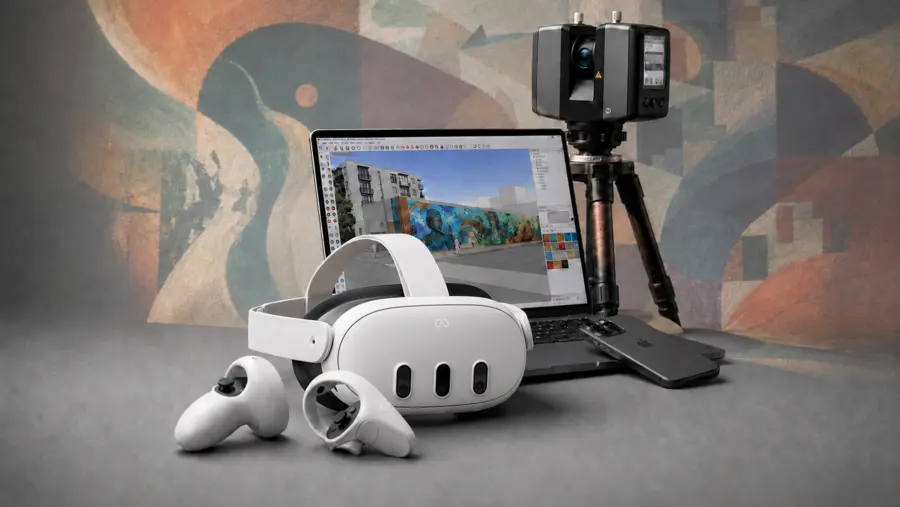
Use digital design, tablets, projection, augmented reality, and emerging visualization tools to test composition, scale, and placement before production.
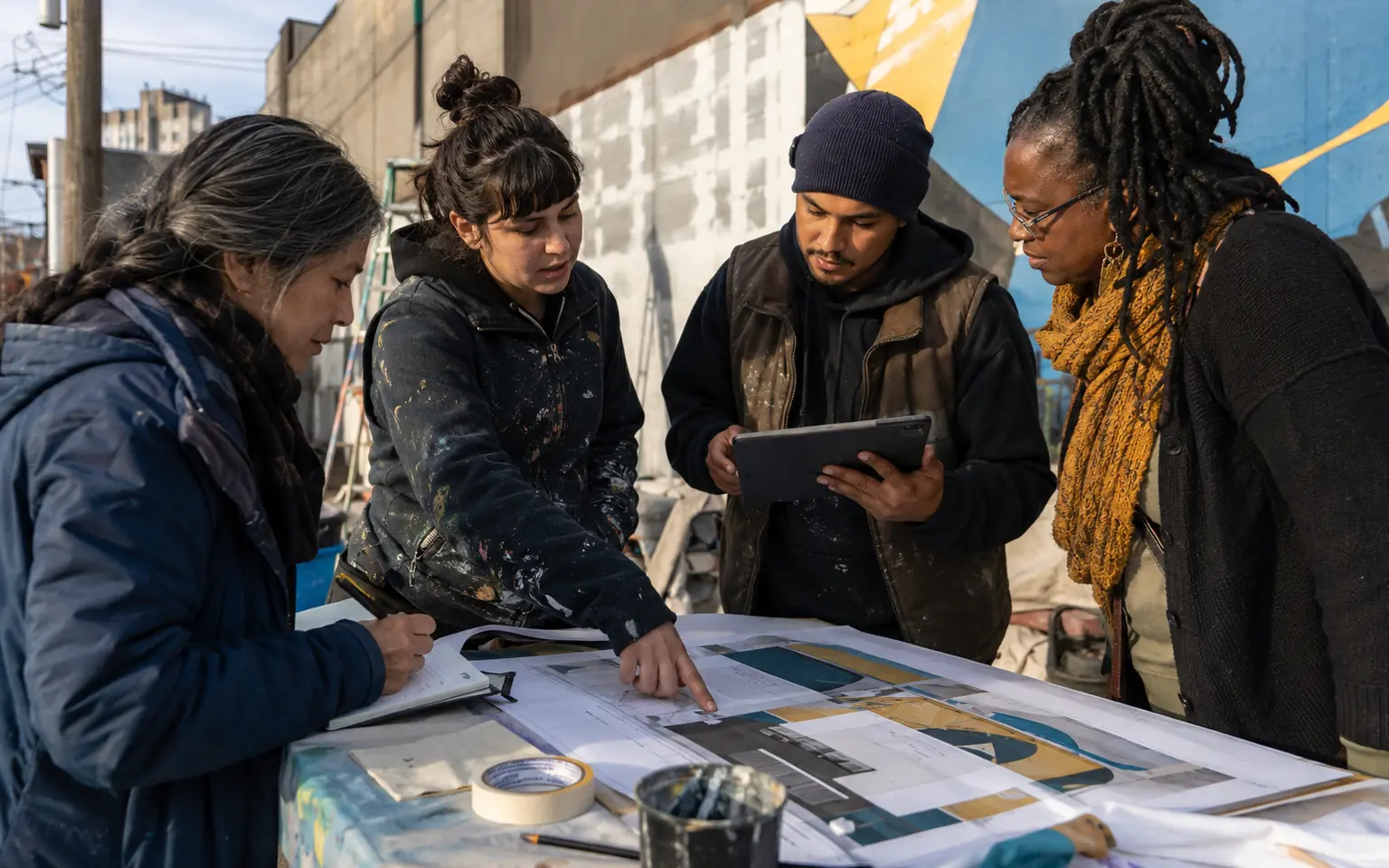
Work alongside artists, educators, clients, project managers, and community partners while learning how clear decisions keep a project moving.
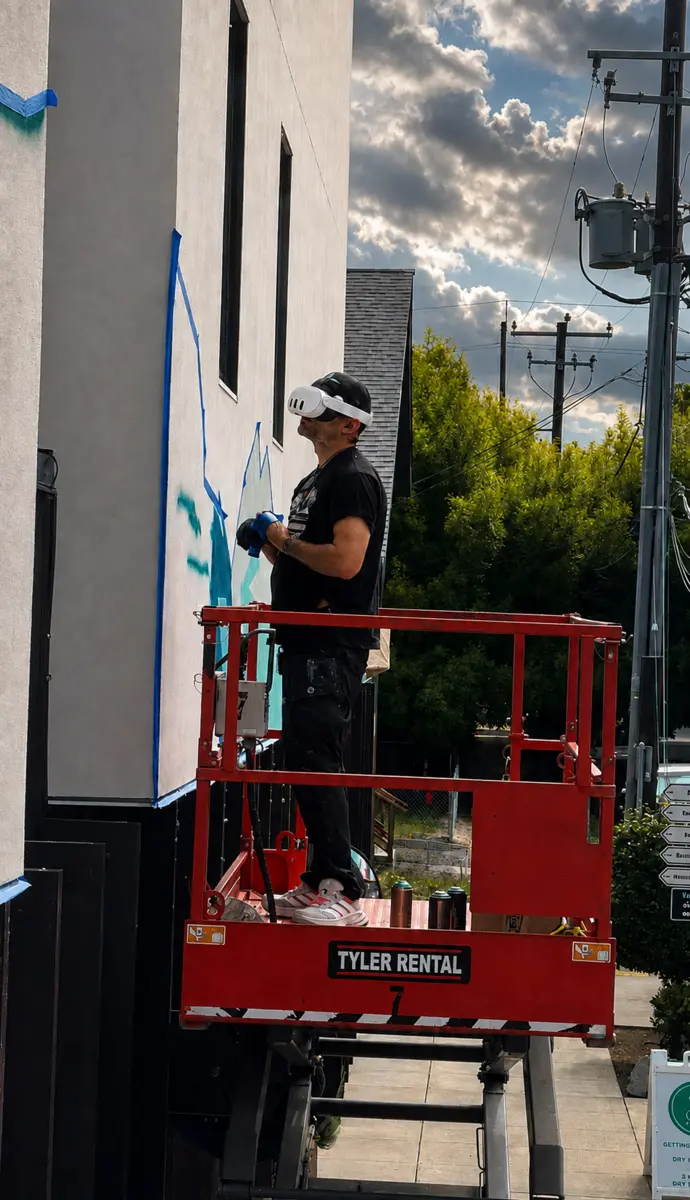
Document the work, understand expectations, solve problems in real time, and develop transferable experience for mural arts, painting, and related creative careers.
Technology supports craftsmanship
Digital design, projection, tablets, augmented reality, and emerging AR/VR visualization tools help participants understand composition, scale, and placement on architecture before paint reaches the wall.
These tools complement—not replace—drawing, painting, material knowledge, observation, judgment, and hands-on problem-solving.
Different paths into learning
PME learning may happen through paid placements or unpaid educational experiences. Each opportunity should explain who it is designed for, what participants will learn, what commitments are expected, and whether compensation is provided.
Paid learning roles may be built into eligible commercial or public-art commissions, with the participant’s scope and compensation stated before work begins.
Unpaid educational experiences may focus on specific techniques, tools, demonstrations, or early skill development outside a paid production role.
Workshops and collaborative exercises introduce young learners to public art, large-scale thinking, storytelling, teamwork, and creative problem-solving.
Structured mentorships and exchanges allow participants to learn through new materials, environments, working methods, and cultural perspectives.
School and youth learning
Young learners explore how murals and public art transform ideas into shared places. Drawing, collaborative design activities, storytelling, and creative problem-solving help students build foundational artistic skills, confidence, and teamwork.
Program formats, age ranges, schedules, pricing, accessibility accommodations, and supplied materials will be published only when each offering is confirmed.
Become involved
Artists, students, educators, schools, cultural organizations, and experienced professionals can begin a conversation about training, mentorship, workshops, or partnership.
Become Involved